

De Beers Diamond Specialist, teaches you about grading, rarity and how synthetic diamonds could be perfect for the watch industry
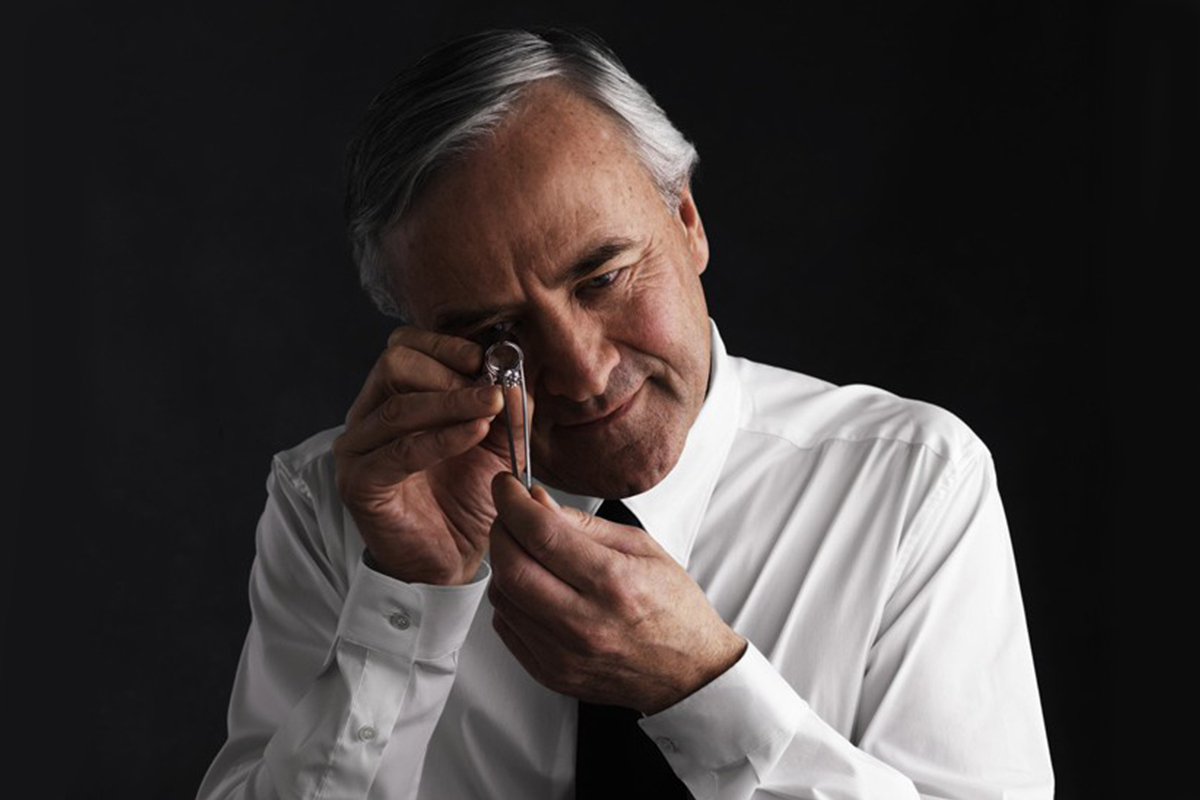
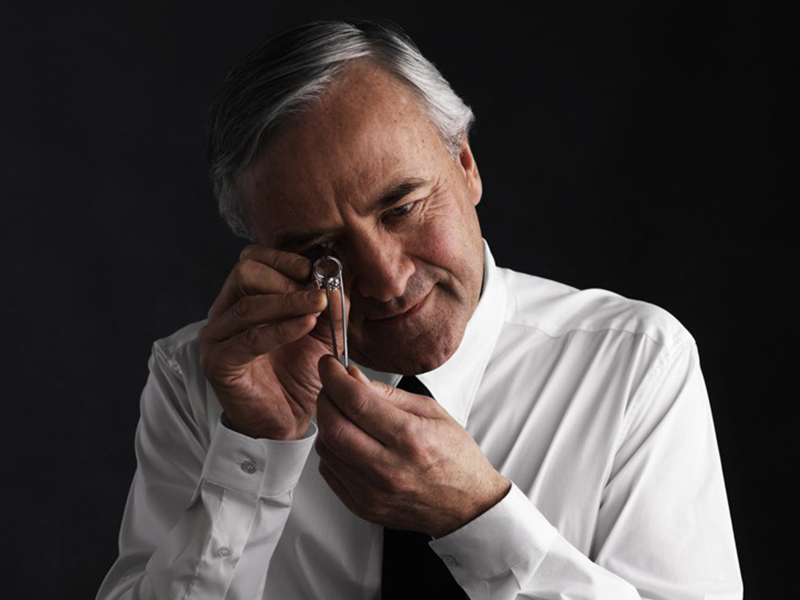
If he does not know everything about diamonds, Andrew Coxon knows more than many working in the watch and jewelry industry. Being the Diamonds Specialist at De Beers since 1968, his experience makes his knowledge about that little precious stone a rare skill. Earlier this fall, after the finding of a red diamond, Coxon talks about biased the grading system of colored diamonds can be and how synthetic diamonds are far from being a threat for the diamond industry. Explanations.
Red diamond = Rarity
By the end of the summer of 2016, De Beers acquired one of the rarest type of diamonds to be found in the world: a red diamond. Andrew Coxon who has been the Diamond Specialist at De Beers for the past decades, talks about the extraordinary finding. He says that there are about 2 red diamonds coming out on the market every 2 or 3 years. In the world, only a few specialists buy and collect them and wait for demand. “That’s the trick!”he admits. Unfortunately, or not – red diamonds have become an investment item that are never mounted on a piece of jewelry. Also, Americans are buying the very few red diamonds that come on the market just to hold on to them! Coxon later explains that it is due to the speculation of the mine about to close within the next 5 years as it is getting too expensive of going underground.
New ways of grading colored diamonds
The educational side has been neglected. I did not realized when I moved behind the closed doors of De Beers into the retail world how the whole jewelry industry had just been relying on what the GIA said about the way it grades diamonds in the laboratory. Nothing more,” says Coxon who regularly gives lectures and training about diamonds. “It is not mentioned on the report – but what the consumer feels in seeing a diamond is equally important as what the GIA certifies.”
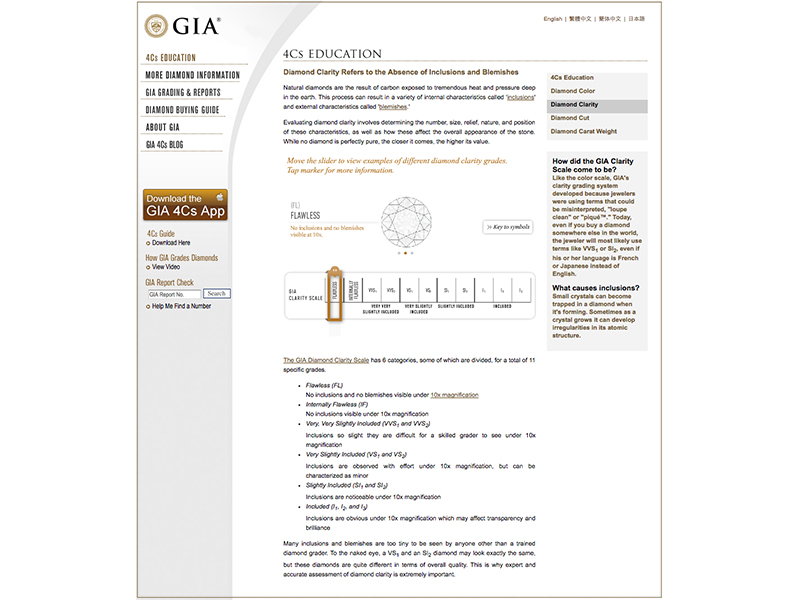
Andrew Coxon goes on explaining how the GIA only started to do fancy colors in the mid-70s. They had color samples but when they graded the diamond – more precisely, when they graded colored diamonds – they turned the diamond upside down. And then what do they see ? The amount of nitrogen all the way down is perfect for sampling but it has got nothing to do with the beauty of the color. It ignores the beauty of the color completely! He emphasizes on the fact that grading a diamond goes way beyond checking only what the GIA officially asks to check. Therefore, after questioning different departments, graders found new ways at looking at diamonds. They turn the diamond all the way up. And look at it as a whole. The faceting, the skill of the cutter, the transparency of the original material comes into play in a world called beauty – which is something the GIA never grades !
Sometimes, you get to grade a diamond that is modest in terms of colors concentration but beautiful as whole… and up it goes ! Diamonds that are very beautiful, but do not have a very strong pink will get a vivid pink grade because graders love it ! It is biased …
Why would they do that?
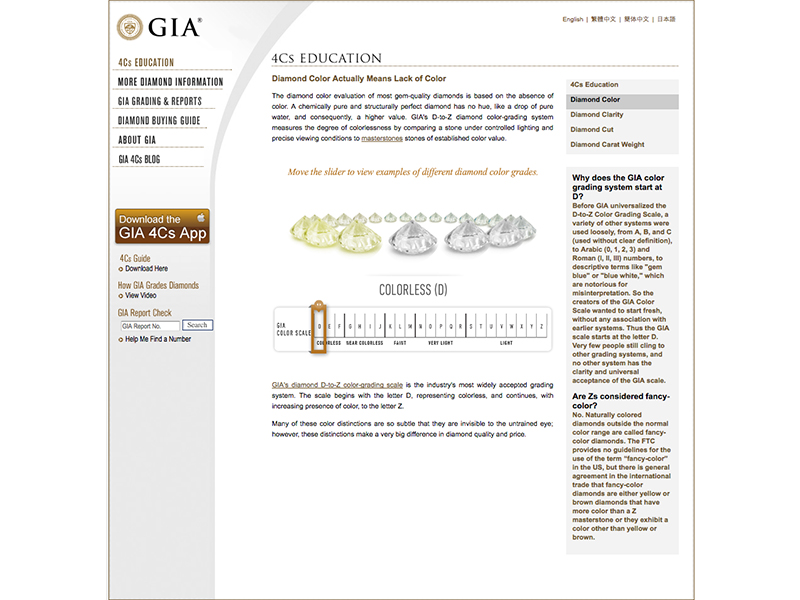
I honestly think it’s some trade pressure. The trade lived with what they did to begin with ! Cheating the consumer in a way… They were working only for the gem trade. They managed to persuade the GIA when they wanted to work on the principle that what was written on the paper is the price the stone should be. You go through 23 sub-division of white but you go through 4 sub-division of pink ? Of course, in the head of dealers, for every single grade of colors – we have 4 or 5 prices with a 50% difference in spread. As long as they could persuade the consumer to look at the paper rather than looking at the diamond. They could buy a diamond that was borderline lower grade, lower color, promote it and try to get something : this one is worth 100, I’m selling it to you at 75 but it’s actually worth 50.
After talking about grading system and extraordinary rare diamonds, we have asked Andrew Coxon a few questions about the rise of synthetic diamonds and how can it pervert the market. He did not seem to worry much about the synthetic diamond expansion.
Your thought about synthetic diamonds?
Not a problem ! It’s difficult to detect synthetic diamonds from natural ones if you don’t have the machine. Although they are very easy to detect… (Says the pro… of course!)
Can a natural vs. A synthetic diamond offer the same perception?
There will be a certain percentage of the market that will think that getting a good deal is a good buy. The person who is going to make a lot of money is the person making the synthetic diamond. Nobody controls the synthetic.
Here are 2 reasons why synthetic diamonds won’t take over the diamond market:
1- First, when synthetic sapphires and rubies were made, the scandal was not that they were good – they were actually better than the natural stones– but it was the fact that they were not disclosed and they did not have the technology to tell what was natural from what was man-made! Then… It took a while for the consumer confidence to come back !
2- Secondly, natural vs. synthetic diamonds are two separate markets. With synthetic diamonds, they are going to produce better diamonds in larger quantities with prices going cheaper and cheaper… therefore the value is going to collapse ! Diamonds will be such a cheap item that it won’t be considered as a luxury anymore.
Will people compare a natural and a synthetic diamonds as equal?
I don’t think it’s possible ! Synthetics will be much cheaper than natural diamonds. Bare in mind that to get a good quality, highly colored and large diamond: it is very expensive for them to make it ! At the moment, they make a block that has a lot of inclusions. They polish that away and come up with many more small diamonds. But they can make crystals bigger …. To grow one big diamond with enough quality is very expensive. Logically, they are going to be a lot of synthetic diamonds on the market that are going to get cheaper and cheaper –so when somebody will want to re-sell something they paid- it is going to devalue very fast !
One of the reasons why people love diamonds is that the value overtime has always gone up with GDP. Since Mother Nature stopped making diamonds 800 millions years ago ! It has given people some confidence. There can never be a big change in the market. There is a 10 years stability coming up within the diamond industry due to the opening of Canadian mines and the closing of South African mines. It’s going to shake the natural market into making sure that everybody knows that there is a big difference between the two. But in terms of value, only education and mentality will make the leap. If you buy a real one it will be a lasting stone value whereas if you buy a synthetic diamond it will be a little bit cheaper but over time and fall in value. There will be so many factories making synthetic values …
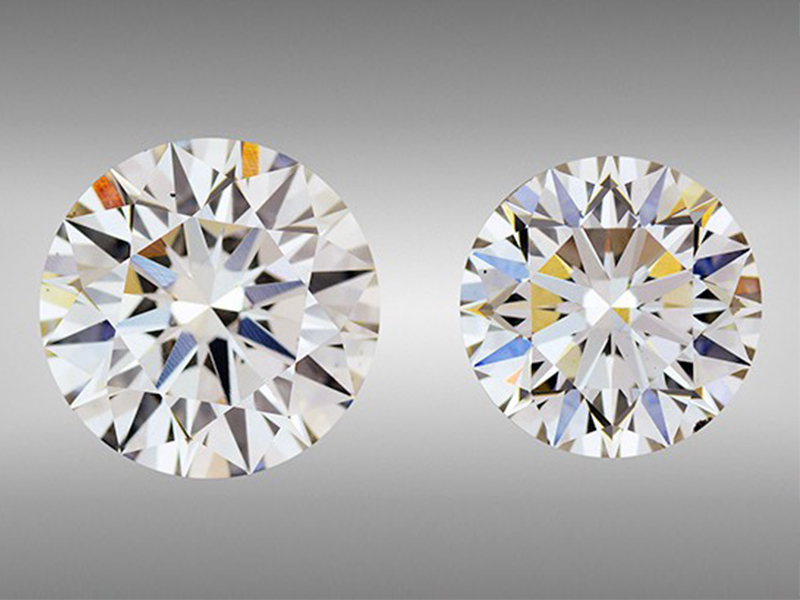
What about florescence in diamonds?
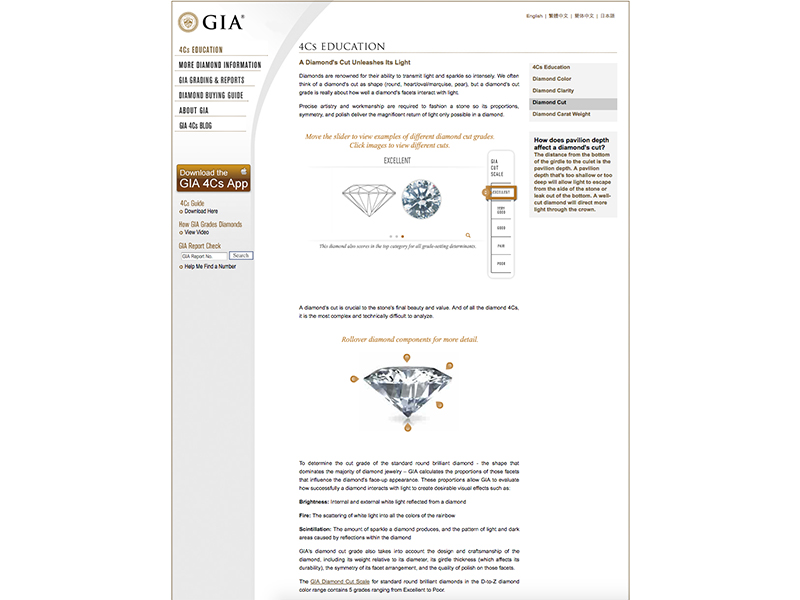
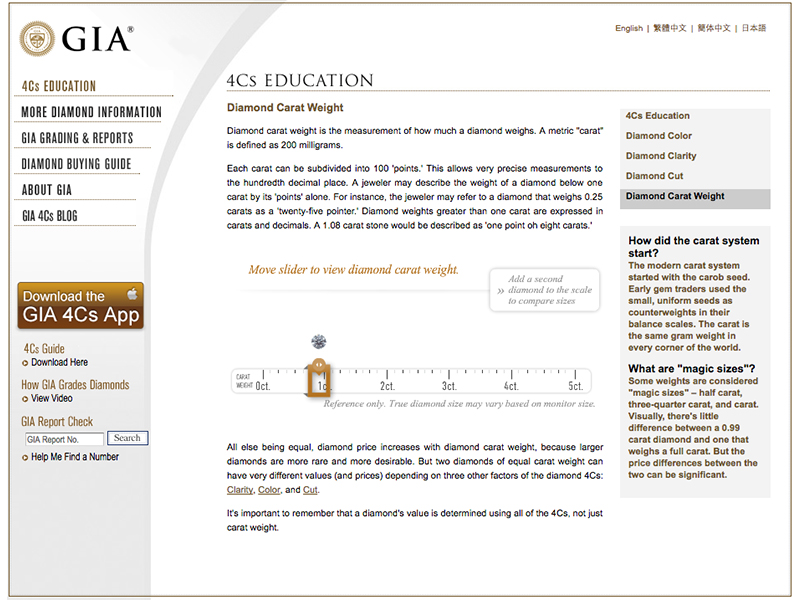
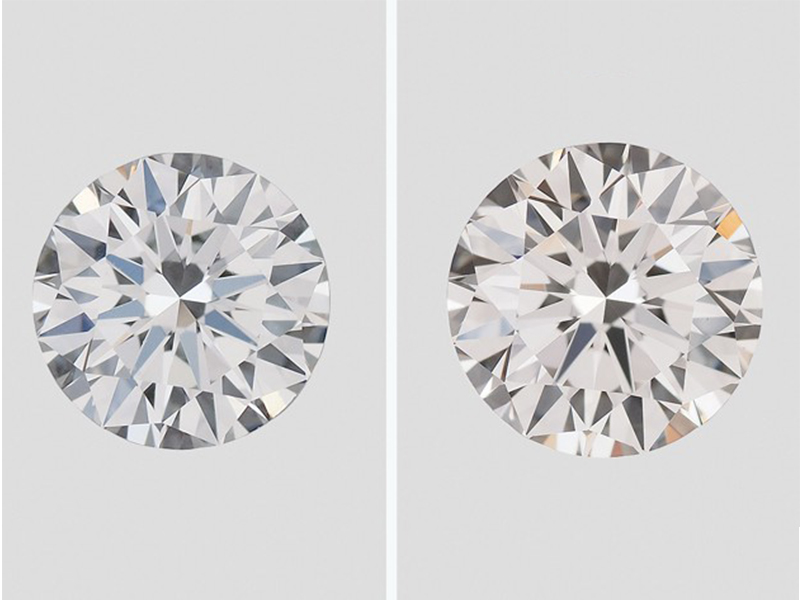
The florescence (how much does a diamond can glow in the dark) varies a lot from one diamond to another. Coxon likes to say to people that florescence is not a decease ! Since diamonds are all completely different so is their florescence ! For example, there is a mine in Russia where all of the diamonds are florescent – however, their florescence is different from one diamond to another. Some are yellow florescent under yellow light some are blue. Sometimes it can be green. Normally it’s a blue florescence glowing in a blue-ish tone.
The main problem is getting a matching florescence ! Because most diamonds come from different mines. Therefore, if you get diamonds from the same mines, you could potentially match up their florescence color and make something special where it would not look like a tutti-frutti of colors. When you get that strength of florescence. You have to accept a dull diamond in natural light. Bare in mind that florescence gives a sort of milk-iness tone to the diamond. But the transparency is not affected by the florescence only that when it has a strong florescence, the structure of the diamond has been altered so much that you can get diamonds 30% cheaper if it has a large amount of florescence on the same GIA graded diamond without florescence. In reality, a diamond with high florescence looks like a diamond that needs to be wiped!
Moving forward… Would it be possible to have a set made of sytnhetic diamond with exact same florescence?
Good question ! I am assuming they would … but they would have to spend some money to research and figure this out ! Synthetic diamonds would actually be perfect for the watch industry : because adding diamonds to a watch bezel is not about diamonds anymore !.